

Introduction
Most home injuries develop from ordinary tasks rather than dramatic events. A wet bathroom floor, loose rug, cluttered stairway, or forgotten pan can quickly create a hazardous situation.
Family members may notice these risks during visits, but they cannot always provide regular support. Small problems can build up between appointments, especially when mobility, vision, balance, or memory changes.
Household help creates a more consistent routine for keeping living spaces clear, clean, and manageable. It also gives relatives a clearer view of how the home is functioning between visits.
In practice, senior home safety assistance focuses on practical tasks that reduce preventable hazards without disrupting familiar daily routines.
How Household Help Changes Daily Risk
A safer home is usually an organized home. Household helpers address conditions that can make routine movement, cooking, bathing, and reaching for items less secure.
Regular assistance can prevent clutter from accumulating in high-traffic areas. It can also ensure commonly used items remain within easy reach, reducing the temptation to climb, stretch, or carry too much at once.
The value is not limited to cleaning. A helper who visits consistently can notice changes such as unopened mail, expired food, poor lighting, or a growing number of items left on the floor. These observations help families respond before a minor issue becomes an urgent problem.
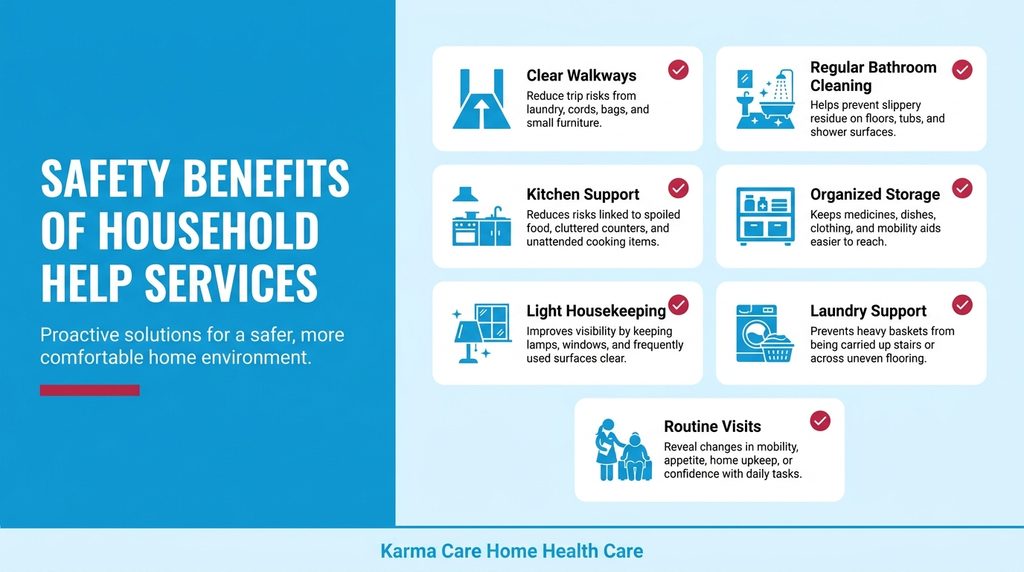
Safety Benefits Of Household Help Services
Household support improves safety by making daily tasks more predictable and reducing exposure to common home hazards.
– Clear walkways reduce trip risks from laundry, cords, bags, and small furniture.
– Regular bathroom cleaning helps prevent slippery residue on floors, tubs, and shower surfaces.
– Kitchen support reduces risks linked to spoiled food, cluttered counters, and unattended cooking items.
– Organized storage keeps medicines, dishes, clothing, and mobility aids easier to reach.
– Light housekeeping can improve visibility by keeping lamps, windows, and frequently used surfaces clear.
– Laundry support prevents heavy baskets from being carried up stairs or across uneven flooring.
– Routine visits can reveal changes in mobility, appetite, home upkeep, or confidence with daily tasks.
These benefits work best when household help follows the person’s normal routines and priorities.
Household Tasks That Need Consistent Support
Certain tasks create more risk when they are delayed. Bathroom cleaning is one example, because moisture and product buildup can make surfaces slick. A helper can dry floors, replace worn bath mats, and keep frequently used toiletries within reach.
Kitchen tasks also deserve attention. Clearing counters provides more stable space for meal preparation. Checking refrigerator contents can reduce the chance of eating expired food. Washing dishes promptly limits clutter around the sink and stovetop.
Home organization matters as well. Frequently used items should stay between waist and shoulder height. Heavy cookware, seasonal items, and bulk supplies should not be stored where reaching, bending, or climbing is required.
Signs That Help Is Needed At Home
A need for support is often visible through changes in the home rather than a direct request for help.
– Hallways or stairs have stacks of papers, laundry, shoes, or boxes.
– Food is expired, meals are skipped, or the refrigerator contains little usable food.
– Bathrooms appear damp, poorly cleaned, or difficult to use safely.
– Light bulbs are out in entryways, bedrooms, stairwells, or bathrooms.
– Bills, mail, and everyday supplies are piling up in unusual places.
– The person avoids certain rooms because they are difficult to navigate or maintain.
Addressing these signs early can preserve a safer and more comfortable home routine.
Choosing Support That Fits The Home
The right service begins with the actual layout and daily habits of the person receiving help. A one-level apartment may need meal preparation and bathroom cleaning, while a multi-level home may require laundry support, stairway clearance, and regular checks of entry paths.
Start by identifying tasks that require bending, lifting, climbing, carrying, or prolonged standing. These are often the tasks most likely to create avoidable risks. Then decide how often help is needed. Weekly support may suit routine cleaning, while more frequent visits can help with meal preparation, laundry, or ongoing organization.
Clear communication is essential. Helpers should know which rooms are used most, where emergency contacts are kept, and which items must remain easily accessible.
Checks Before Starting Service
A short home review helps match household tasks to the areas where support will have the greatest safety impact.
– Walk through entryways, stairs, bathrooms, kitchens, and bedrooms together.
– Identify rugs, cords, low furniture, and storage areas that obstruct movement.
– List regular chores that involve lifting, reaching, or standing for long periods.
– Agree on where essential items, cleaning supplies, and mobility aids should be stored.
– Set a routine for reporting changes that family members may need to know about.
A written task list keeps the service focused on practical needs rather than general cleaning alone.
Conclusion
Household help can reduce everyday hazards by keeping the home cleaner, clearer, and easier to manage. Consistent support also helps families spot changes in home conditions before they create larger concerns. The household help safety benefits are strongest when services focus on the tasks that create the most strain or risk. Arrange a home walk-through with a trusted provider or family member to identify the first tasks that need support.
FAQs
Q: Can household help reduce fall risks for seniors?senior home safety assistance
A: Yes. Helpers can keep walkways clear, manage laundry, clean slippery bathroom surfaces, improve lighting, and place commonly used items within easy reach.
Q: What household tasks are most useful for senior safety?
A: Bathroom cleaning, kitchen organization, laundry, light housekeeping, meal preparation, and clearing entryways are often the most useful tasks.
Q: How often should a senior receive household help?
A: The right schedule depends on the home, mobility needs, and task demands. Weekly visits suit many homes, while more frequent help may be useful for meals, laundry, or ongoing organization.
